
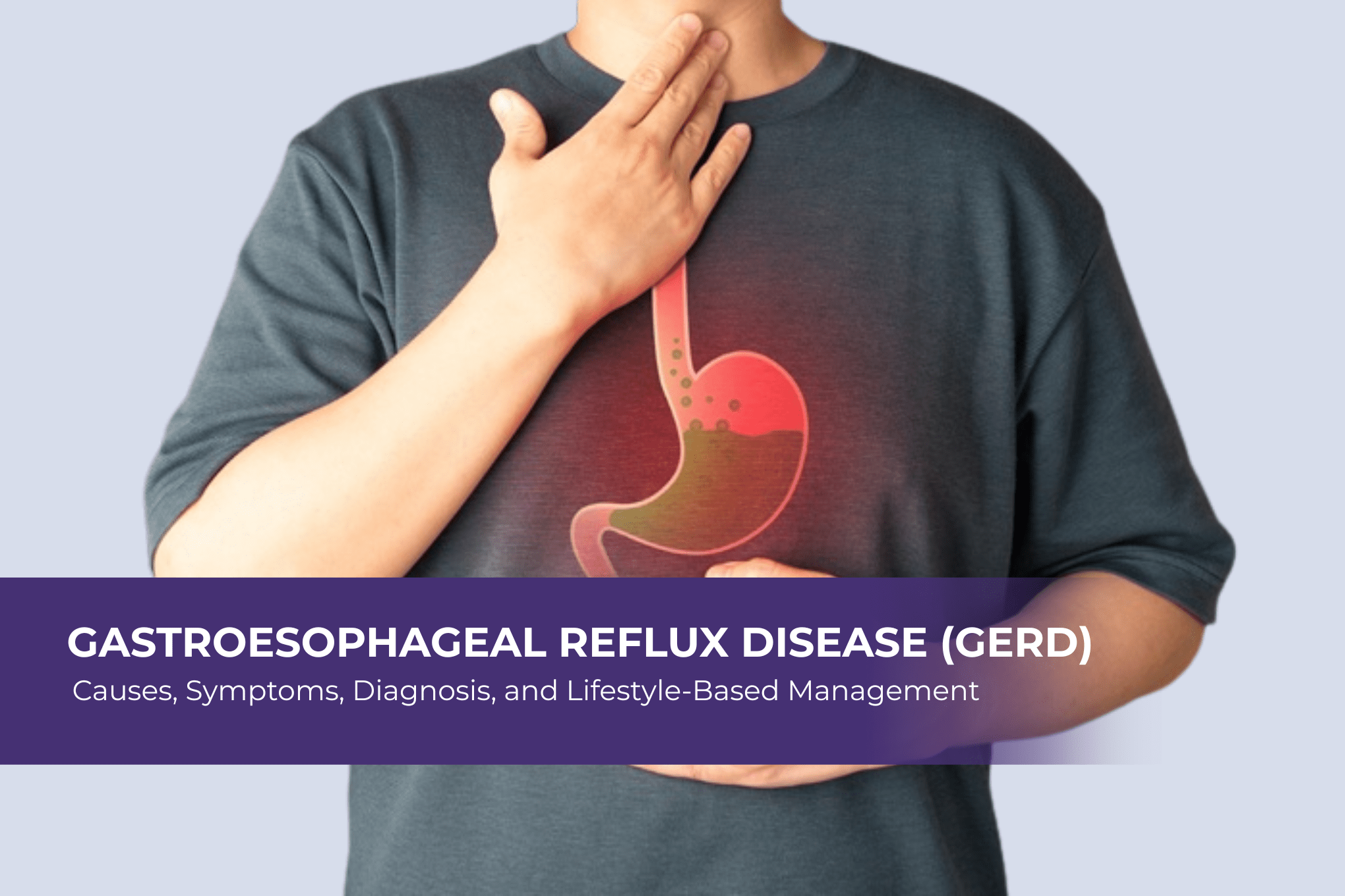
Gastroesophageal Reflux Disease, commonly known as GERD, is a digestive condition in which stomach acid and partially digested food repeatedly flow back into the food pipe (esophagus). While occasional acid reflux is common, GERD is a chronic condition that can cause persistent discomfort and, if left untreated, may lead to serious complications.
GERD affects people of all ages and has become increasingly common due to modern lifestyle habits, dietary patterns, and rising obesity rates.
How Gastroesophageal Reflux Disease (GERD) Develops
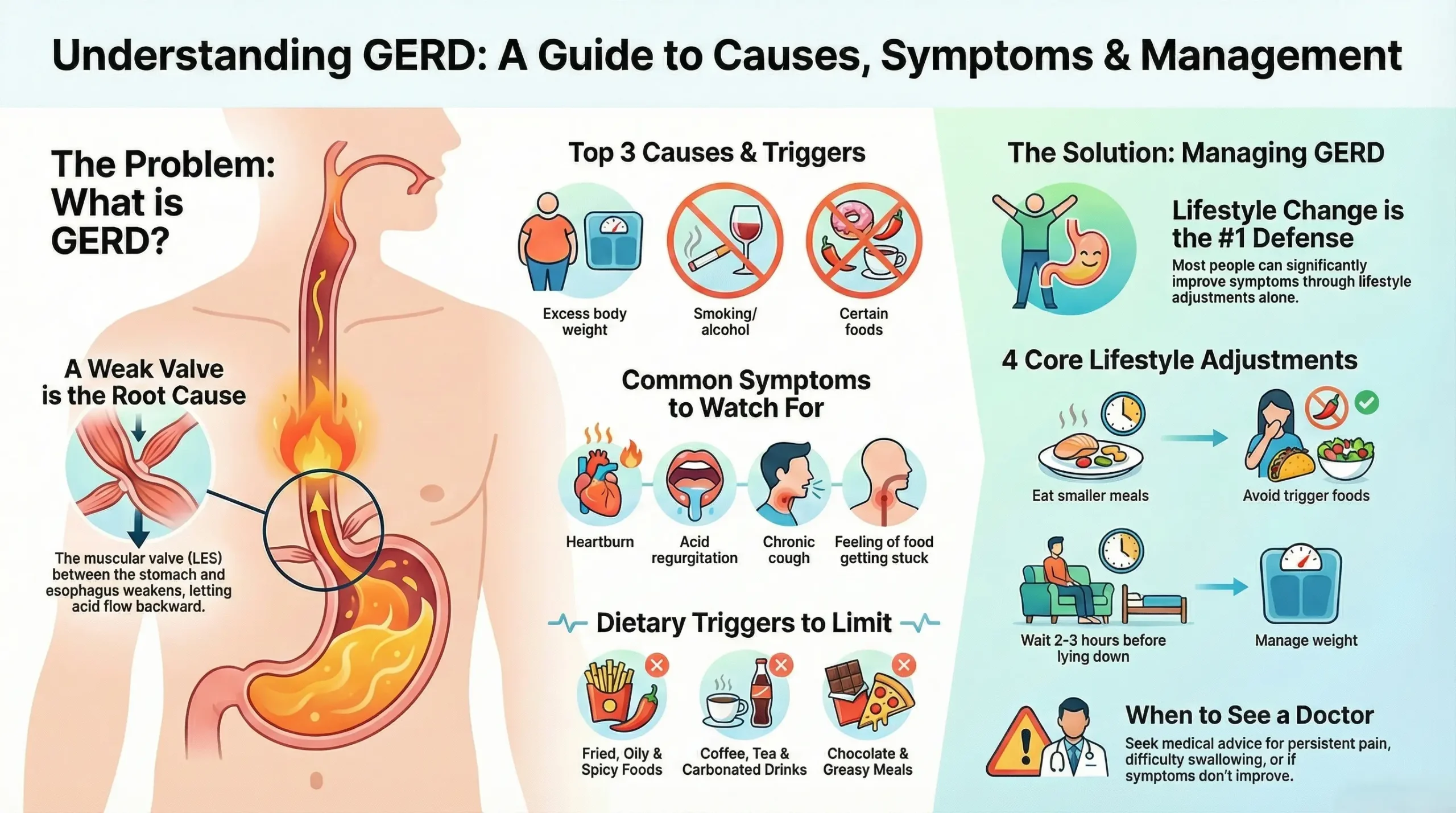
Between the stomach and the food pipe lies a muscular valve known as the lower esophageal sphincter (LES). Under normal conditions, this sphincter remains tightly closed and opens only when food passes into the stomach or during vomiting. Its primary function is to prevent stomach contents from flowing backward.
In people with GERD, this sphincter becomes weak or partially open even when it should be closed. As a result, stomach acid and food move upward into the esophagus in small amounts throughout the day. This repeated exposure irritates the lining of the food pipe, leading to inflammation, pain, and other symptoms.
Over time, chronic acid exposure can damage the esophageal lining and, in severe cases, increase the risk of complications, including precancerous changes.
Common Symptoms of Gastroesophageal Reflux Disease (GERD)
GERD symptoms can vary in intensity and frequency. Some people experience mild discomfort, while others develop persistent and disruptive symptoms.
Common signs include:
- A burning sensation in the chest (heartburn)
- Acid or food coming back up into the throat
- A feeling of food getting stuck while swallowing
- Chronic cough or frequent throat irritation
- Chest discomfort not related to the heart
- Hoarseness or sore throat, especially in the morning
What Causes Gastroesophageal Reflux Disease (GERD)?
GERD usually develops due to a combination of mechanical pressure, lifestyle factors, and dietary habits.
Excess Body Weight
Increased body weight places additional pressure on the stomach. This pressure pushes stomach contents upward, making it easier for acid to reflux into the esophagus. This is why GERD is more common in individuals who are overweight or obese.
Smoking and Alcohol
Smoking weakens the lower esophageal sphincter and reduces saliva production, which normally helps neutralize acid. Alcohol has a similar relaxing effect on the sphincter, increasing reflux episodes.
Dietary Triggers
Certain foods are known to loosen the sphincter or increase acid production. These include:
- Fried and oily foods
- Excessively greasy meals
- Chocolate
- Very spicy foods
- Tea, coffee, and caffeinated drinks
- Carbonated beverages
These foods may not directly cause GERD, but they can significantly worsen symptoms in susceptible individuals.
How GERD Is Diagnosed
In many cases, GERD is diagnosed based on symptoms and response to treatment. However, when symptoms are severe, persistent, or accompanied by warning signs, further evaluation is necessary.
The most commonly used diagnostic test is upper gastrointestinal endoscopy. This is a safe and quick procedure, usually completed within a few minutes. A thin camera is inserted through the mouth to examine the esophagus and stomach. This allows direct visualization of inflammation, ulcers, or sphincter weakness.
If needed, a small tissue sample (biopsy) can be taken during the procedure to rule out infection or more serious conditions.
Lifestyle Changes: The Foundation of GERD Management
Lifestyle modification is the most important and effective part of GERD management. In many cases, symptoms improve significantly without long-term medication when lifestyle habits are corrected.
Key recommendations include:
- Avoid smoking and alcohol
- Reduce intake of oily, fried, and spicy foods
- Limit tea, coffee, and soft drinks
- Eat smaller meals and avoid overeating
- Maintain a gap of at least 2–3 hours between dinner and lying down
- Elevate the head slightly while sleeping
- Maintain a healthy body weight through regular physical activity
These changes reduce pressure on the stomach and prevent acid from flowing backward.
Medical and Surgical Treatment Options
When lifestyle modifications alone are not sufficient, medications may be used to reduce acid production and protect the esophagus. These treatments are usually effective but may not be suitable for long-term use in all individuals.
In cases where symptoms persist despite medication and lifestyle changes, surgical options such as fundoplication may be considered. This procedure strengthens the lower esophageal sphincter to prevent reflux. Surgery is typically reserved for severe or complicated cases.
When to Seek Medical Attention
Certain symptoms should not be ignored, as they may indicate complications:
- Persistent chest burning
- Difficulty or pain while swallowing
- Frequent regurgitation of food
- Chronic cough or recurring sore throat
- Symptoms that do not improve with lifestyle changes
👉 For guidance or evaluation, you may also book an online consultation through the MedIQ app.
Final Thoughts
GERD is a common but manageable condition. Understanding how it develops and recognizing its triggers allows many people to control symptoms effectively through lifestyle adjustments alone. Early attention to symptoms can prevent long-term complications and significantly improve quality of life.
Healthy eating habits, weight management, and mindful daily routines remain the most powerful tools in keeping acid reflux under control.