
Weight loss can be challenging, especially for people living with obesity or excess weight along with conditions such as high blood pressure, type 2 diabetes, or high cholesterol. While healthy eating and regular physical activity remain the foundation of weight management, some people may require additional medical support.
One medication that has gained significant attention for weight management is tirzepatide.
Tirzepatide is a prescription injectable medication that works differently from many traditional weight-loss treatments. It mimics the actions of two naturally occurring hormones, GIP (glucose-dependent insulinotropic polypeptide) and GLP-1 (glucagon-like peptide-1).
But how exactly does tirzepatide help with weight loss? How effective can it be, and what side effects should you know about?
Let’s take a closer look.
What Is Tirzepatide?
Tirzepatide is an injectable medication that activates receptors for two hormones: GIP and GLP-1.
These hormones are naturally released by the body after eating and play important roles in appetite, digestion, insulin secretion, and blood sugar regulation.
Tirzepatide is administered as a once-weekly injection under the skin. It has been used under the brand name Mounjaro for the treatment of type 2 diabetes, while the FDA approved tirzepatide under the brand name Zepbound for chronic weight management in eligible adults in November 2023.
How Does Tirzepatide Work for Weight Loss?
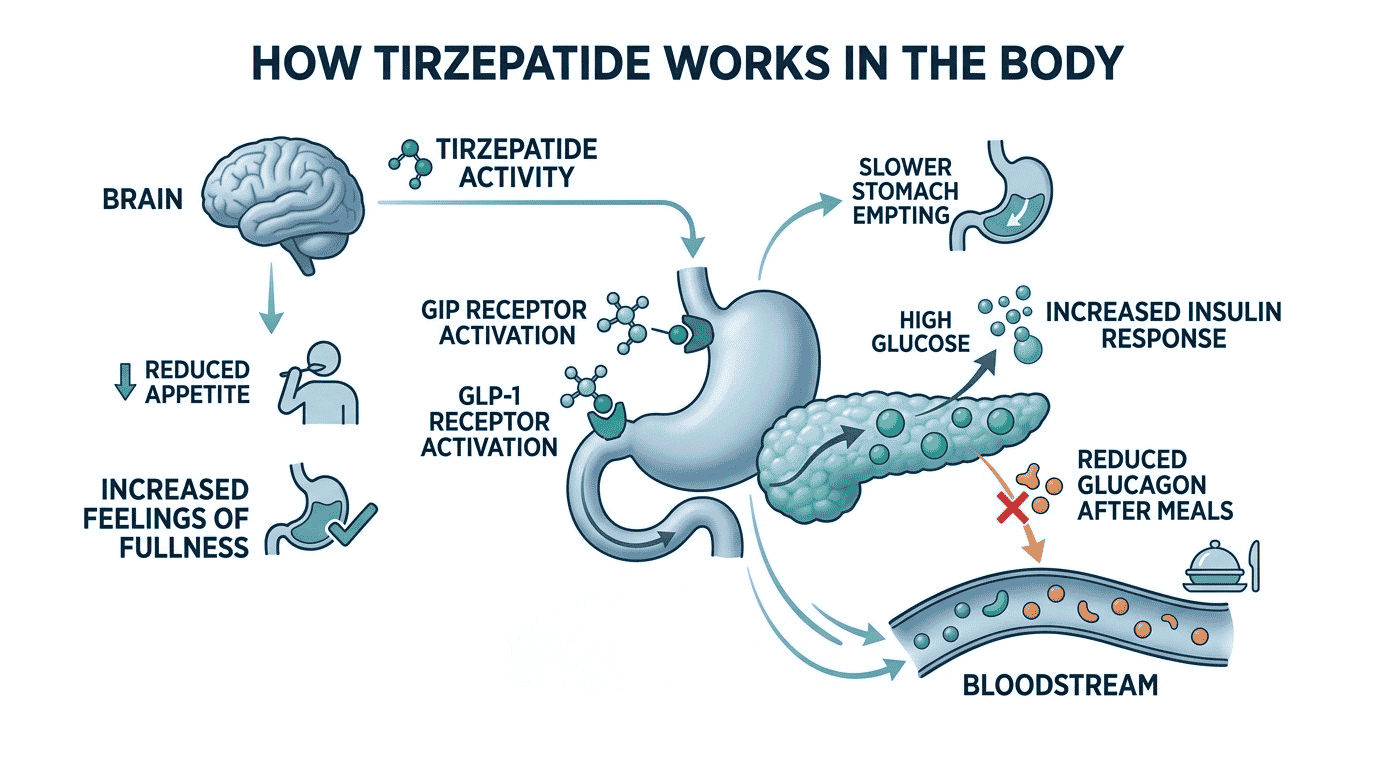
The unique feature of tirzepatide is that it targets two hormone pathways rather than one.
1. It Reduces Appetite
Tirzepatide activates GIP and GLP-1 receptors, including pathways involved in appetite regulation.
This can reduce feelings of hunger and make it easier for a person to control their food intake.
2. It Increases Feelings of Fullness
The medication can increase satiety, meaning you may feel full after eating and remain satisfied for longer.
As appetite decreases and fullness increases, overall calorie intake may decrease, contributing to weight loss.
3. It Slows Stomach Emptying
Tirzepatide also slows the movement of food from the stomach. This can contribute to a longer-lasting feeling of fullness and may support reduced calorie intake.
4. It Helps Regulate Blood Sugar
Tirzepatide stimulates insulin secretion and reduces glucagon release from the pancreas.
This helps improve blood glucose control, particularly after meals.
5. It Supports Fat Breakdown
The medication also promotes fat breakdown, which contributes to its overall effects on body weigh
Who May Be Prescribed Tirzepatide for Weight Loss?
According to the source, tirzepatide was approved for adults with obesity or overweight who also have at least one weight-related health condition, such as:
- High blood pressure
- Type 2 diabetes
- High cholesterol
However, whether tirzepatide is appropriate for an individual depends on their medical history and should be determined by a qualified healthcare professional.
How Effective Is Tirzepatide for Weight Loss?
Clinical trials have demonstrated significant weight reduction among participants taking tirzepatide alongside a reduced-calorie diet and increased physical activity.
Two major Phase 3 trials mentioned in the source were SURMOUNT-1 and SURMOUNT-2.
SURMOUNT-1
SURMOUNT-1 studied adults with obesity or overweight who did not have diabetes.
After 72 weeks:
- 5 mg: Average weight reduction of 15%
- 10 mg: Average weight reduction of 19.5%
- 15 mg: Average weight reduction of 20.9%
- Placebo: Average weight reduction of 3.1%
A large majority of participants receiving the 10 mg and 15 mg doses achieved at least a 5% reduction in body weight.
SURMOUNT-2
SURMOUNT-2 included adults with obesity or excess weight who also had type 2 diabetes.
After 72 weeks:
- 10 mg: Average weight reduction of 12.8%
- 15 mg: Average weight reduction of 14.7%
- Placebo: Average weight reduction of 3.2%
The results showed that tirzepatide produced substantially greater average weight loss than placebo in this study population.
What Are the Side Effects of Tirzepatide?
Like any medication, tirzepatide can cause side effects.
The source specifically reports gastrointestinal side effects, including:
- Nausea
- Vomiting
- Diarrhea
- Constipation
- Abdominal pain or discomfort
Injection-site reactions and hypersensitivity have also been reported.
If you experience concerning or severe symptoms while taking tirzepatide, contact your healthcare professional.
Is Tirzepatide a Magic Weight-Loss Solution?
No. Although clinical trials have demonstrated substantial weight loss, medication alone should not be viewed as a replacement for healthy lifestyle habits.
A successful and sustainable approach to weight management includes:
- A balanced, healthy diet
- Regular physical activity
- Appropriate medical supervision
- Long-term lifestyle changes
The source emphasizes that tirzepatide should be part of a comprehensive approach rather than being considered a magic solution for weight loss.
Tirzepatide and Lifestyle Changes
Weight management is not simply about reducing the number on the weighing scale. Maintaining a healthy weight can help reduce the risk associated with several chronic conditions.
Even relatively modest weight loss can provide meaningful health benefits. The source notes that losing around 5–10% of body weight through diet and exercise can significantly reduce cardiovascular risk in people who are overweight or obese.
Therefore, medication and lifestyle changes should work together rather than being viewed as competing approaches.
Final Thoughts
Tirzepatide is a relatively new approach to weight management that works through both GIP and GLP-1 hormone pathways. By reducing appetite, increasing feelings of fullness, slowing stomach emptying, supporting insulin secretion, and helping regulate blood sugar, it can contribute to significant weight loss in eligible patients.
Clinical trials such as SURMOUNT-1 and SURMOUNT-2 have demonstrated substantial average weight reductions among participants receiving tirzepatide alongside lifestyle interventions.
However, tirzepatide is not suitable for everyone, and it should only be used under appropriate medical supervision.
Medical Disclaimer
This article is for general health education only and does not replace professional medical advice. Always consult a qualified healthcare professional before starting, stopping, or changing any medicatio