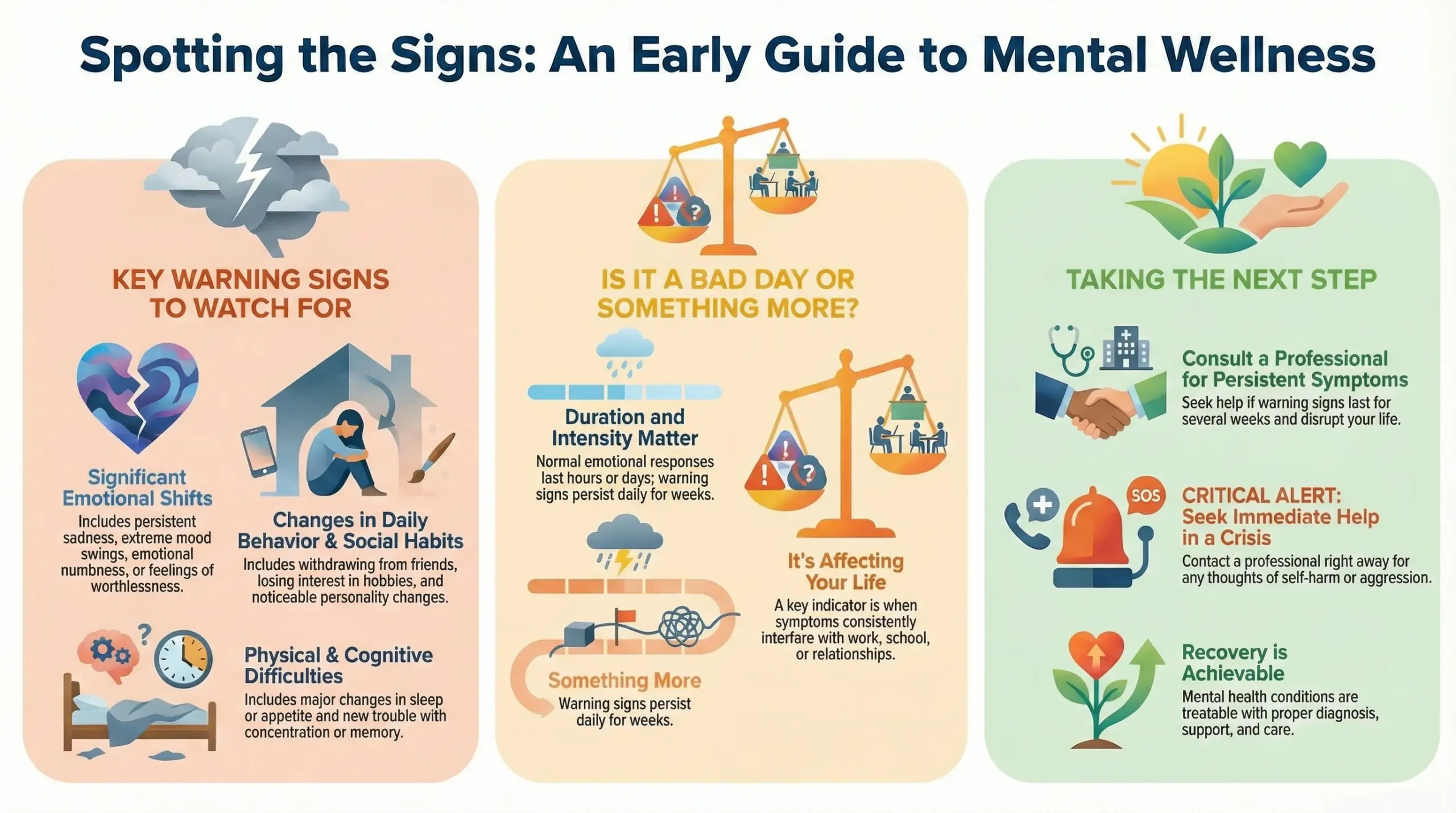
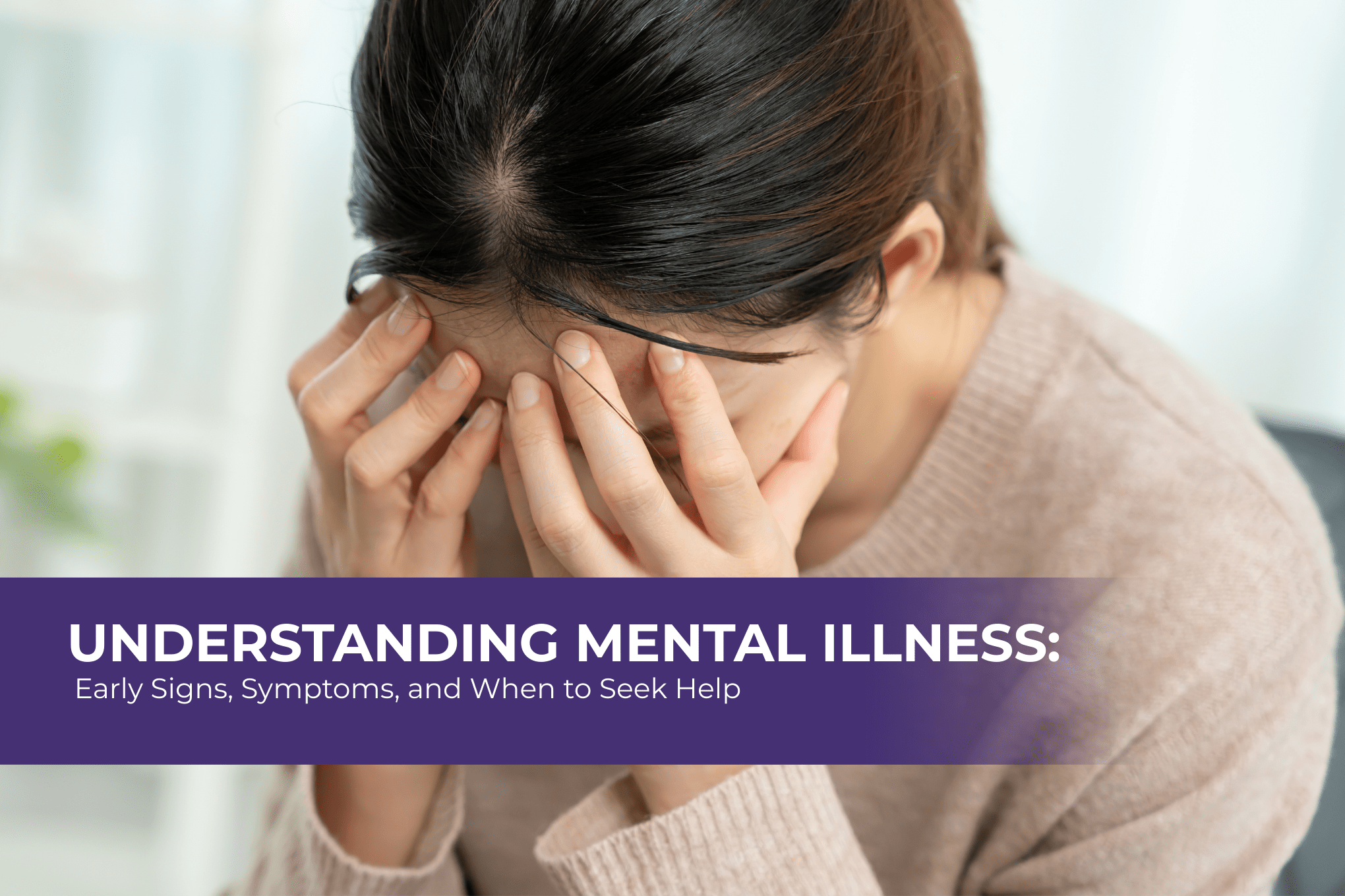
Mental health is an essential part of overall well-being, yet it is often misunderstood or ignored. Talking about mental illness openly can make the journey easier, not only for those experiencing it but also for their families and communities. When we understand the signs and symptoms, we are better equipped to recognize when something is wrong and take timely action.
Mental illness does not always appear suddenly. In many cases, it develops gradually through emotional, behavioral, and physical changes that begin to affect daily life.
Common Signs and Symptoms of Mental Illness
1. Changes in Sleep Patterns
Sleep disturbances are one of the earliest indicators of mental health issues.
- Difficulty falling or staying asleep
- Sleeping too much or too little
- Feeling constantly tired despite adequate rest
2. Changes in Appetite and Eating Habits
Mental health conditions often impact eating behavior.
- Loss of appetite or overeating
- Irregular meal patterns
- Sudden weight loss or gain
3. Social Withdrawal
A noticeable reduction in social interaction can be a warning sign.
- Avoiding family and friends
- Losing interest in social gatherings
- Feeling overwhelmed by meeting people
4. Loss of Interest in Daily Activities
Activities that once brought joy may no longer feel meaningful.
- No interest in hobbies or routines
- Lack of motivation to perform daily tasks
- Spending most of the day lying in bed
5. Behavioral and Personality Changes
Mental illness can cause noticeable changes in behavior.
- Acting unusually or out of character
- Increased suspicion or paranoia
- Avoiding conversations and isolating oneself
6. Emotional Distress and Inner Struggles
Emotional symptoms are often difficult to explain but deeply impactful.
- Persistent feelings of worthlessness or guilt
- Emotional pain without a clear reason
- Feeling overwhelmed by minor responsibilities
7. Difficulty Concentrating and Remembering
Cognitive changes are common and can affect performance.
- Trouble focusing or making decisions
- Forgetting small details
- Declining performance at school or work
8. Emotional Numbness
Some individuals stop feeling emotions altogether.
- No emotional response to happy or sad events
- Feeling empty or disconnected
- Lack of excitement during important occasions
9. Mood Swings
Rapid emotional changes may occur without warning.
- Sudden shifts from happiness to sadness
- Crying without a clear reason
- Emotional instability throughout the day
10. Aggressive or Self-Harming Behavior
In severe cases, symptoms may escalate.
- Increased anger and irritability
- Verbal or physical aggression
- Self-harm or suicidal thoughts