
Sleep is one of the most essential functions of the human body, yet it is also one of the most neglected. In recent years, sleep problems have become increasingly common, affecting people of all ages and lifestyles. One of the most prevalent sleep-related conditions is insomnia, often referred to as a sleep disorder.
Insomnia does not simply mean “sleeping late” or “having one bad night.” When sleep problems persist and begin to interfere with daily functioning, mental clarity, mood, and productivity, they become a serious health concern. Understanding insomnia, its causes, and how it can be improved is the first step toward restoring healthy sleep.
What Is Insomnia?
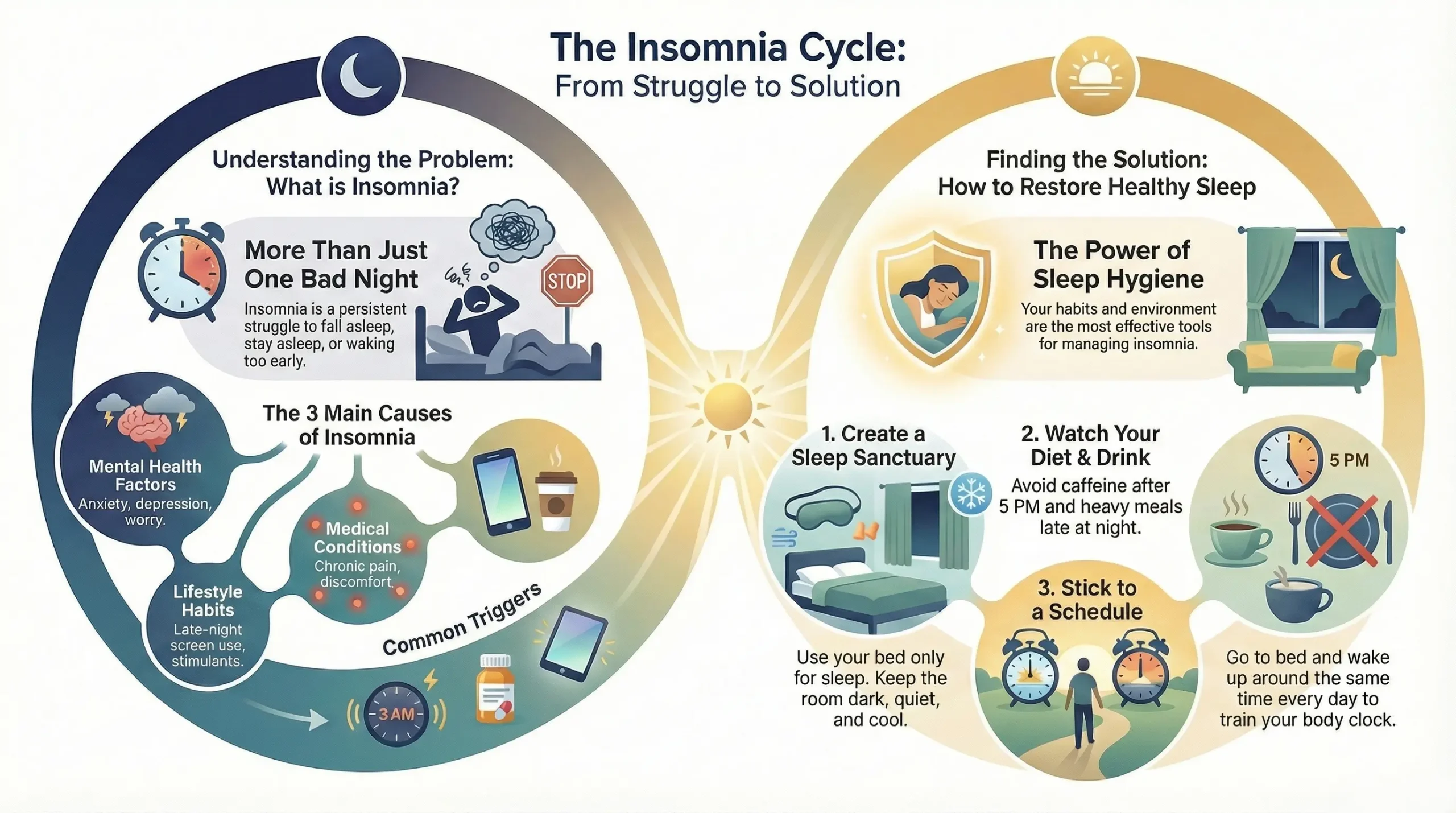
Insomnia is a condition in which a person struggles with sleep despite having adequate time and opportunity to rest. It may appear in different forms. Some people find it extremely difficult to fall asleep, lying awake for hours while their mind remains active. Others fall asleep initially but wake up repeatedly throughout the night. Some wake up very early in the morning and are unable to return to sleep, even though their body still feels tired.
When these sleep disturbances continue for weeks or months, the condition is known as chronic insomnia. At this stage, sleep deprivation begins to affect both physical health and emotional well-being.
Different Ways Insomnia Manifests
Insomnia does not look the same for everyone. For many individuals, excessive thinking, over analysis, or worry delays sleep onset, sometimes by two to three hours. For others, sleep feels light and fragmented, breaking repeatedly during the night. Early morning awakening is another common pattern, where a person wakes up far earlier than intended and remains awake despite feeling exhausted.
These patterns disrupt the natural sleep cycle and prevent the body from completing restorative stages of sleep, which are critical for recovery and brain function.
Why Sleep Is Essential for the Body and Mind
Sleep is not a passive state. While the body rests, the brain remains highly active, repairing tissues, regulating hormones, strengthening memory, and resetting emotional balance. Adequate sleep supports concentration, decision-making, learning, mood regulation, and immune health.
When sleep is consistently poor, people often experience persistent fatigue, irritability, low motivation, reduced focus, and slower mental processing. Over time, lack of sleep affects work performance, emotional stability, and overall quality of life.
What Causes Insomnia?
Insomnia rarely has a single cause. In most cases, it develops due to a combination of psychological, medical, and lifestyle factors.
Mental Health and Emotional Factors
Mental health plays a significant role in regulating sleep. Conditions such as anxiety and depression are among the most common causes of insomnia. Anxiety keeps the mind in a constant state of alertness, making it difficult to relax enough to fall asleep. Depression, on the other hand, may disrupt sleep patterns by causing early morning awakenings or restless sleep.
Some individuals also develop a fear of sleep itself, experiencing panic-like thoughts such as worrying that something bad may happen if they fall asleep. This creates a cycle where fear leads to sleeplessness, and sleeplessness increases fear.
Medical and Physical Conditions
Chronic medical conditions, long-term illnesses, persistent pain, or physical discomfort can interfere with sleep quality. When the body is under physical stress, restful sleep becomes difficult to achieve.
Certain medications can also disrupt sleep by affecting brain chemistry or increasing alertness, especially if taken later in the day.
Lifestyle and Behavioral Factors
Modern lifestyles have significantly altered natural sleep rhythms. Work-from-home routines, irregular schedules, late-night screen exposure, and daytime sleeping have blurred the boundaries between day and night. Excessive use of mobile phones, laptops, and televisions before bedtime can suppress melatonin, the hormone responsible for initiating sleep.
Post-Pandemic Rise in Sleep Disorders
Following the COVID-19 pandemic, sleep disturbances became even more widespread. Lockdowns disrupted daily routines, reduced physical activity, increased screen time, and blurred work–life boundaries. Many people shifted to irregular sleep schedules, staying awake at night and sleeping during the day. These changes significantly disturbed the body’s circadian rhythm, making insomnia more common and persistent.
How Insomnia Is Treated
Treating insomnia begins with identifying its root cause. Sleep problems caused by medical conditions require appropriate medical management. When insomnia is linked to anxiety, depression, or emotional stress, addressing mental health becomes the priority.
Once the underlying issue is managed, sleep often begins to improve naturally. In many cases, behavioral changes and lifestyle adjustments play a more powerful role than medication alone.
The Importance of Sleep Hygiene
One of the most effective ways to manage insomnia is by improving sleep hygiene, which refers to habits and environmental factors that promote healthy sleep.
Using the bed exclusively for sleeping helps the brain associate the bed with rest rather than work or entertainment. Activities such as scrolling on a phone, watching videos, or working while in bed confuse the brain and delay sleep signals.
Caffeine intake also plays a significant role. Tea, coffee, and energy drinks stimulate the nervous system and should be avoided in the evening hours, ideally after 5 PM.
Diet influences sleep as well. Certain foods, such as bananas, support the production of melatonin, a hormone essential for sleep regulation. Heavy meals late at night, however, can disturb sleep.
A calm and comfortable sleep environment supports relaxation. A quiet, dimly lit bedroom with a comfortable mattress and controlled temperature helps the body transition into sleep mode. Maintaining a consistent sleep and wake time each day trains the internal clock and improves long-term sleep quality.
Living Well with Better Sleep
When sleep improves, its effects are noticeable across every aspect of life. Mood becomes more stable, energy levels increase, concentration improves, and daily tasks feel more manageable. Productivity rises not because people work longer hours, but because they function more efficiently.
If sleep problems persist despite lifestyle improvements, seeking guidance can be helpful.
You may book an online consultation through the MedIQ app for professional support.
Final Thoughts
Insomnia is not just a nighttime issue. it is a condition that affects daytime functioning, emotional health, and overall well-being. While occasional sleep disturbance is normal, persistent insomnia deserves attention. With proper awareness, improved sleep habits, and timely support, healthy sleep can be restored.
Good sleep is not a luxury. It is a foundation for mental clarity, emotional balance, and a healthier life.