How Seasons Affect Hair Fall
Many people notice that hair fall varies with the weather. Here’s why.
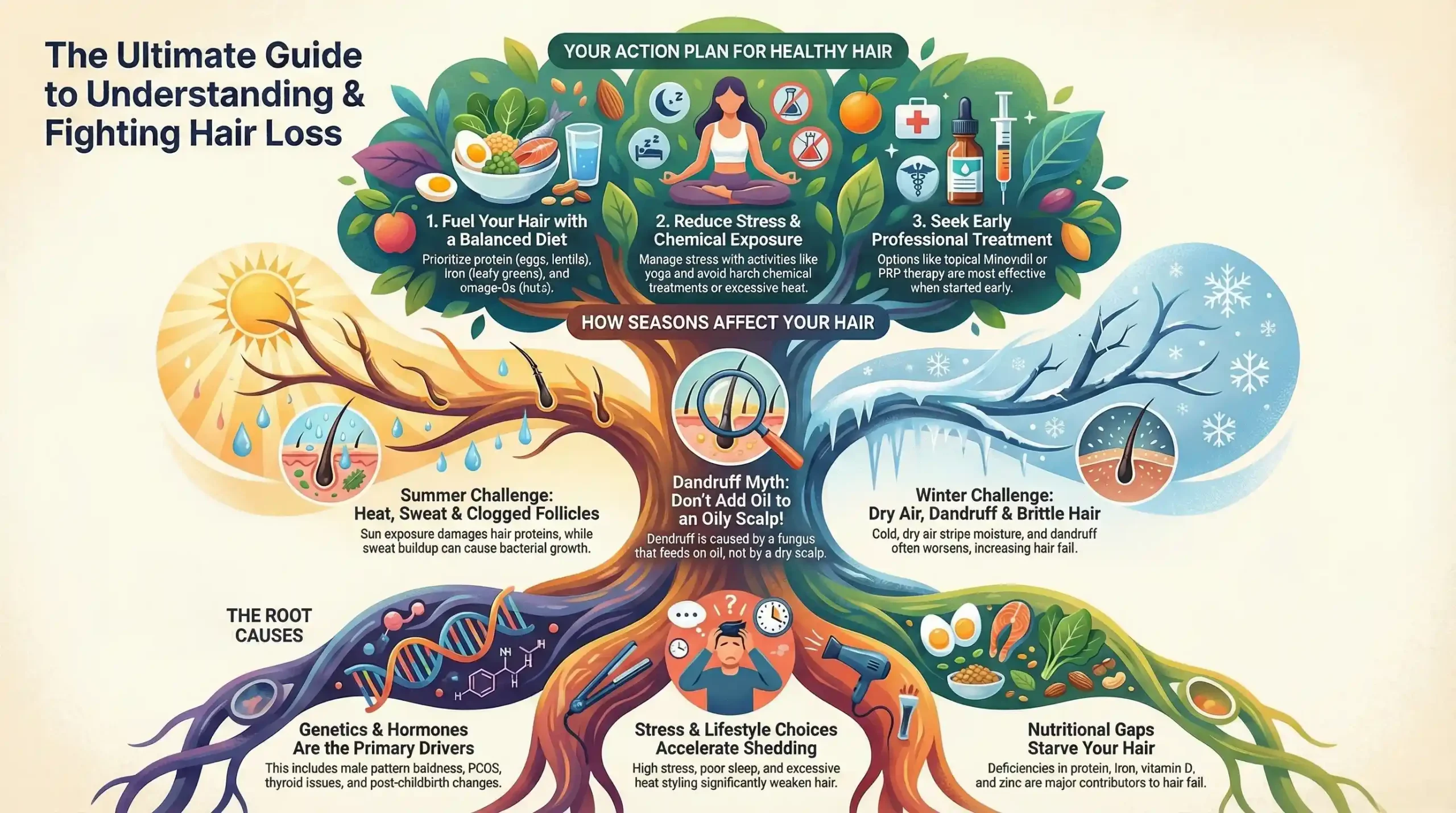
Hair Fall in Summer
Summer increases:
- Heat
- Sweat
- Humidity
- Dust
These conditions block hair follicles and weaken the scalp.
Summer-specific reasons for hair fall:
- Sweat buildup causes itching & bacterial growth
- Dehydration makes hair dry and brittle
- Sun exposure damages hair proteins
- Excess washing strips natural oils
Maintaining scalp hygiene is essential during the summer.
Hair Fall in Winter
Winter affects hair very differently.
Winter-specific reasons for hair fall:
- Dry and flaky scalp
- Increased dandruff
- Reduced moisture in the hair shaft
- Hot water showers weaken roots
- Less sweating → more oil accumulation on scalp
- Cold, dry air makes hair brittle
Dandruff typically worsens in winter, which directly increases hair fall.
Dandruff: Myths, Reality & Treatment
One of the most common misconceptions is:
“Dandruff means the scalp is dry, so apply oil.”
This is wrong.
What Dandruff Actually Is
Dandruff is caused by a fungus (Malassezia)me that thrives on oily scalps.
It multiplies when the scalp stays:
- Sweaty
- Unclean
- Damp after shower
- Exposed to extreme weather
Symptoms
- White flakes
- Itching
- Redness
- Scalp irritation
How to Treat Dandruff
- Use anti-dandruff shampoos with ketoconazole, zinc pyrithione, or selenium sulfide
- Wash hair 2–3 times a week
- Dry your hair properly, especially in winter
- Avoid applying oil directly to dandruff
- Keep your scalp clean in summer
Mild dandruff typically improves within 1–2 weeks, while severe cases require consistent treatment.
How to Prevent Hair Fall (All Seasons)
Prevention starts with removing what is damaging your hair.
1. Manage Stress
Stress directly affects hair growth cycles.
Try:
- Yoga
- Meditation
- Breathing exercises
- Daily walks
- Healthy sleep
2. Improve Your Diet
Hair is composed of protein, and it requires daily nutrients.
Best foods for hair health:
- Eggs, meat, fish
- Lentils, beans, chickpeas
- Leafy greens
- Milk, yogurt, cheese
- Fruits (especially oranges, berries)
- Almonds, walnuts, flax seeds
Essential nutrients:
- Iron
- Vitamin D
- Biotin (B7)
- Zinc
- Omega-3
- Protein
A balanced diet is key. If difficult, consider multivitamins after consulting a provider.
3. Reduce Heat & Chemical Exposure
Avoid:
- Excessive straightening
- Blow drying
- Hair dyes
- Harsh chemical treatments
Heat weakens the hair shaft, causing breakage.
4. Maintain Scalp Hygiene
- Wash hair regularly
- Avoid sweat buildup in summer
- Dry your scalp fully in winter
- Use mild shampoos
- Avoid scratching
Treatment Options for Hair Fall
If your hair has already begun to thin, early treatment is crucial.
1. Topical Treatments (Minoxidil)
Minoxidil sprays and solutions:
- Reduce shedding
- Improve blood flow
- Support regrowth
2. Hair Serums
Serums containing peptides, caffeine, or vitamins help strengthen roots and improve hair density.
3. PRP Therapy (Platelet-Rich Plasma)
PRP has become a widely used non-surgical treatment.
How PRP works:
- A small amount of your blood is drawn
- Growth-factor-rich plasma is separated
- It is injected into thinning areas
Benefits:
- Reduces hair fall
- Strengthens weak roots
- Promotes new growth
- Works best in early stages
Duration:
30–40 minutes
4. Advanced Therapies
Emerging treatments include:
- Stem cell therapy
- Exosome therapy
These treatments are new but are showing positive results.
5. Hair Transplant
In cases of advanced hair loss, a hair transplant may be recommended:
- Natural-looking hairlines
- Long-lasting results
- Improved FUE and FUT techniques are available
Why Early Treatment Matters
Once a hair follicle becomes inactive permanently, regrowth becomes difficult.
If you notice:
- More shedding than usual
- Thinning near the temples
- Bald patches
- Widening hair partition
Start treatment early.
Prevention is always easier than restoration.
When Should You Seek Help?
You should consult a professional if:
- Hair fall continues for over 2–3 months
- Dandruff doesn’t improve
- Rapid thinning occurs
- Scalp itching or redness persists
- Bald patches appear
- Sudden hair fall after illness or stress
👉 For guidance or treatment, you should book an online consultation through the MedIQ app.
Final Thoughts
Hair fall is influenced by genetics, hormones, nutrition, lifestyle, and even the weather. Summer brings sweat and humidity, while winter brings dryness and dandruff; both can damage hair if not managed properly.
But with early diagnosis, a balanced approach, scalp hygiene, good nutrition, and the right treatment plan, most people can significantly reduce hair fall and regain hair strength.
Healthy hair requires consistency, not overnight miracles.